A 14-digit serial typed by hand is a mistake waiting to happen — and a kit nobody scanned is a kit nobody can find. Kitlogi reads the FDA UDI barcode, fills in the entire record, and updates where that kit is, who has it, and what state it’s in.
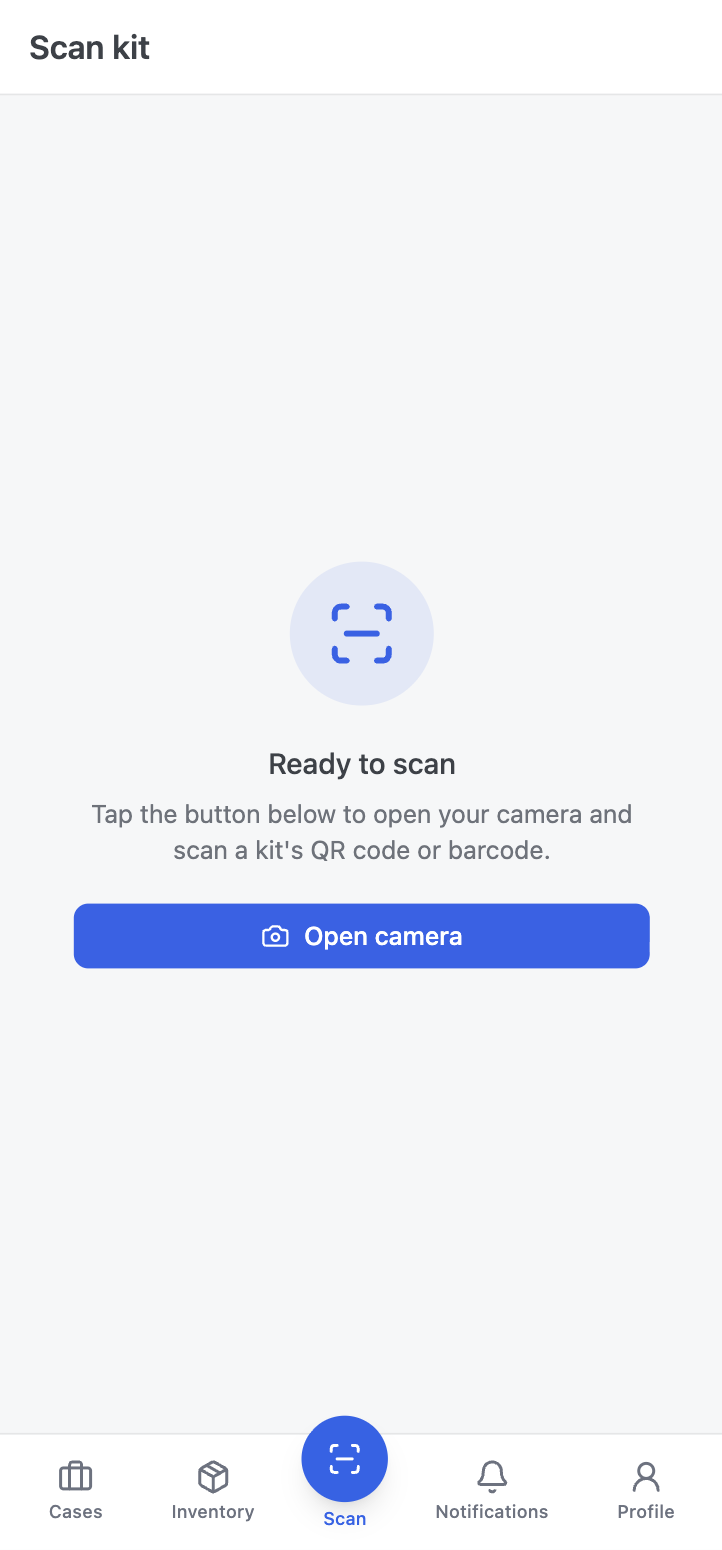
Open the scanner, point the camera at the device’s UDI barcode, and Kitlogi pulls the full device record in seconds. What used to be careful manual typing is now a one-second scan.


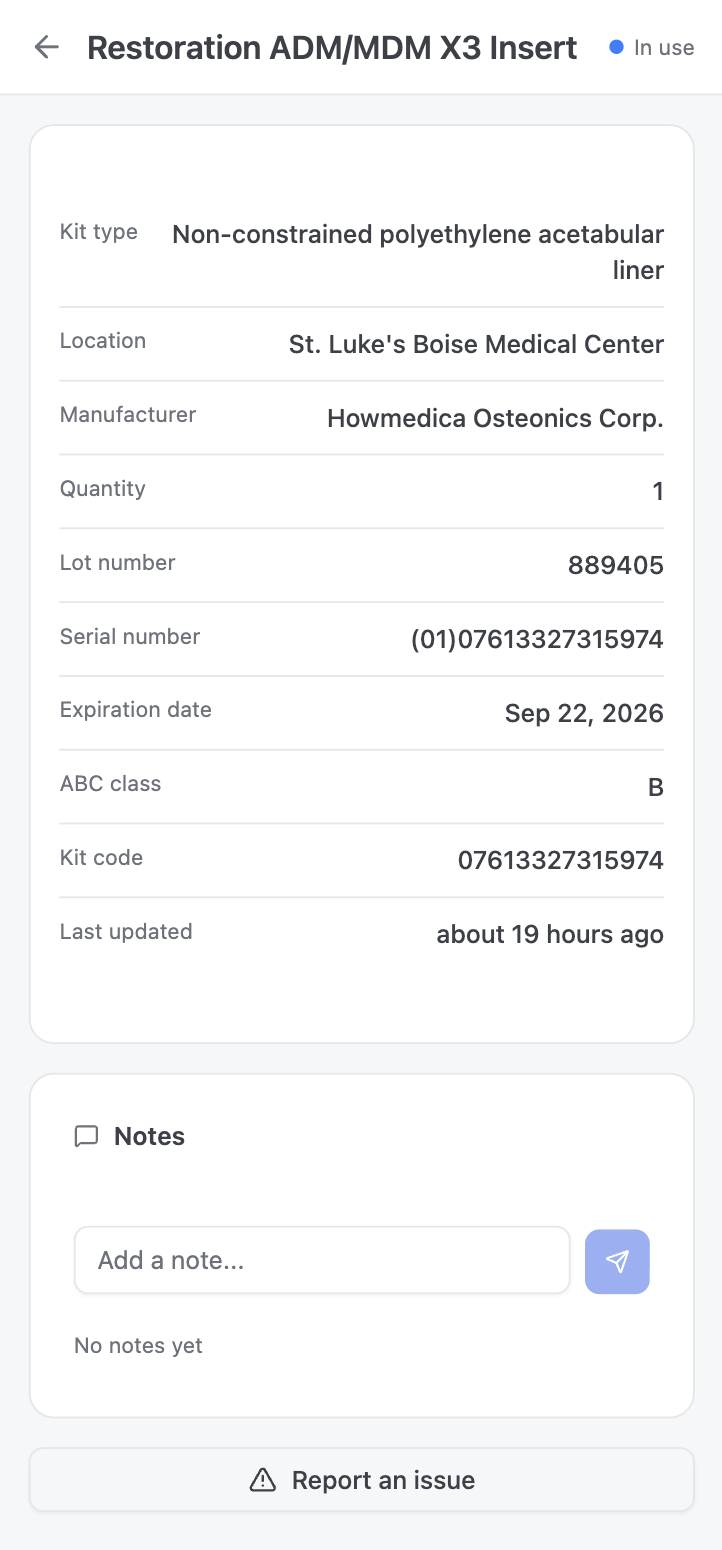
One scan produces the full device detail: kit type, manufacturer, location, lot, serial, and expiration date, ready to assign to a case. No transcription, no second-guessing a smudged label.
The old way is a group text: “who has the spine tray?” In Kitlogi, every scan is a check-in. The kit’s location, holder, and status update the moment it moves — so nothing gets double-booked, left behind, or lost in a trunk.
The last scan pins the kit’s location — the office shelf, a rep’s trunk, or a facility — so nobody has to go hunting.
Every kit shows its current holder and the case it’s assigned to, so two cases never claim the same tray.
Ready, in use, incomplete, or expiring — the status is on the kit itself, visible to the rep and the office at the same time.
The single biggest source of inventory errors, hand-typed serials, disappears.
A tray of devices logs in the time it used to take to type one.
Runs on the rep’s existing phone. No scanner guns to buy or charge.